
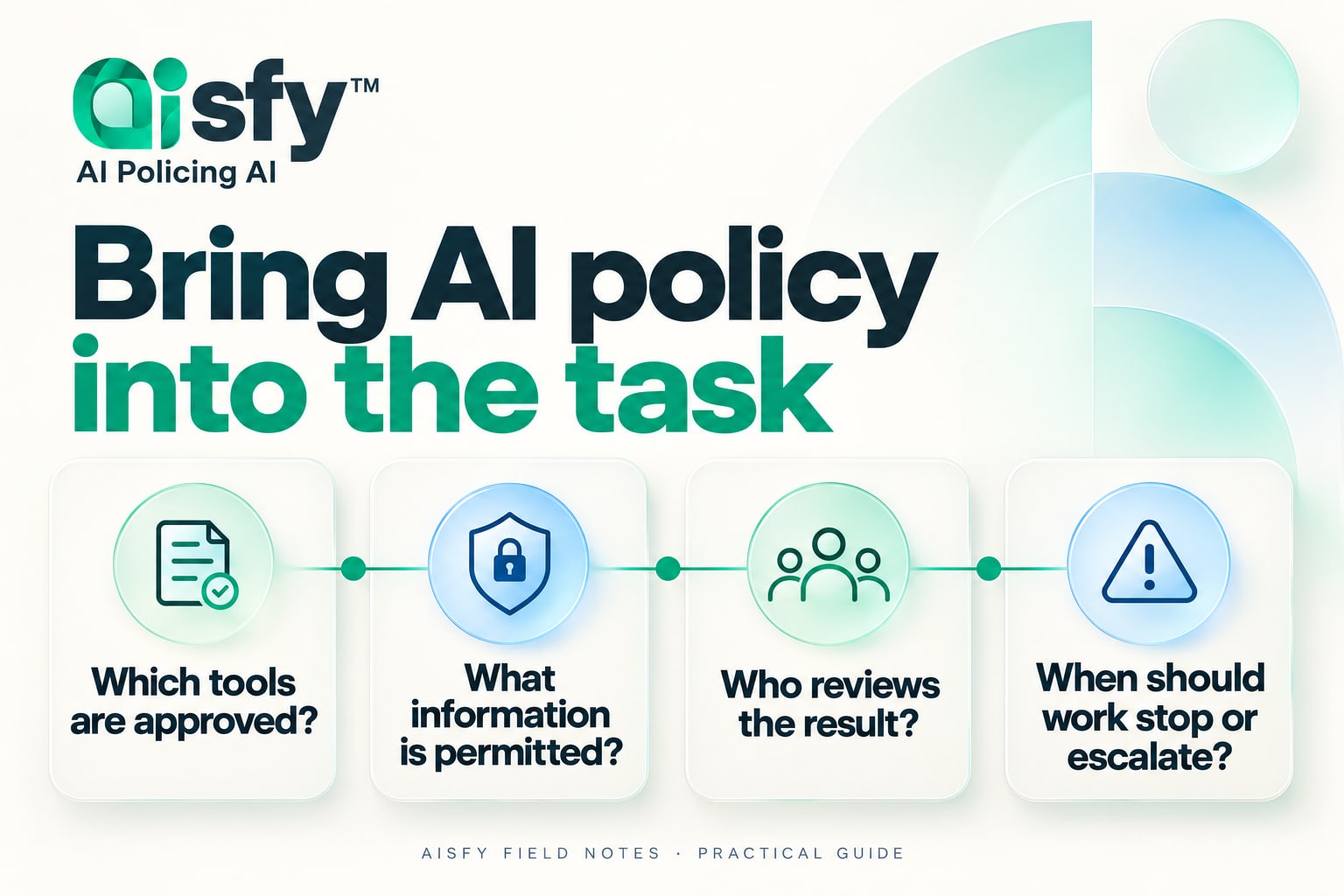
An AI policy workshop should resolve practical questions or assign them to the right owner. A list of principles is useful only when people can apply it to the tasks they encounter.
How should teams bring unresolved decisions into the room?
Collect examples of uncertainty before the workshop: an employee does not know whether a document may be uploaded, a manager is unsure who approves a draft, or a team has no route for reporting a harmful result. Remove sensitive details and use fictional examples where needed.
Invite the people who own the decisions, or make clear that the session will produce recommendations for them. Attendance by a team does not give that team authority to approve new tools, change information policy or accept risk for the organization.
How should teams use a decision checklist?
Separate the question from the answer, evidence and owner. An unanswered question is a valid workshop output if the next action is clear. Do not fill gaps with assumptions to make a policy document look complete.
| Decision area | Question for the owner |
|---|---|
| Permitted tools | Which accounts and features are approved for this task? |
| Information | What may be entered, stored or shared? |
| Human review | Who checks the output before use? |
| External action | Who may send, publish or commit? |
| Escalation | Where do uncertain or harmful results go? |
| Evidence | What records demonstrate that the process was followed? |
| Change | Who revisits the rule when the use or tool changes? |
How should teams run a boundary scenario?
Use a fictional employee preparing a proposal from internal notes. The notes include a draft price, a tentative delivery date and a customer name. Ask which information is permitted in the exercise, what the generated text may say, and who can authorize the final proposal.
A good discussion separates information handling from commercial authority. Even where a tool is approved for some work, that does not authorize it to invent a discount or turn a tentative date into a commitment. Write down the decision and the source of authority rather than relying on a verbal impression.
How should teams check whether the rule is understandable?
Ask a participant who did not draft the rule to explain what they would do next. If two people interpret the same instruction differently, improve the wording or identify the missing policy context. Practical examples can reveal ambiguity that abstract principles hide.
Test a stopping condition as well as a permitted case. For example, include a scenario where the source conflicts and the reviewer cannot establish which version is current. The expected action may be escalation, not a more persuasive draft.
How should teams publish only through the normal approval process?
The workshop record should distinguish agreed learning guidance, proposed policy changes and decisions awaiting approval. Assign each action to an owner and keep the record connected to the organization’s established process. Do not label a draft policy as approved.
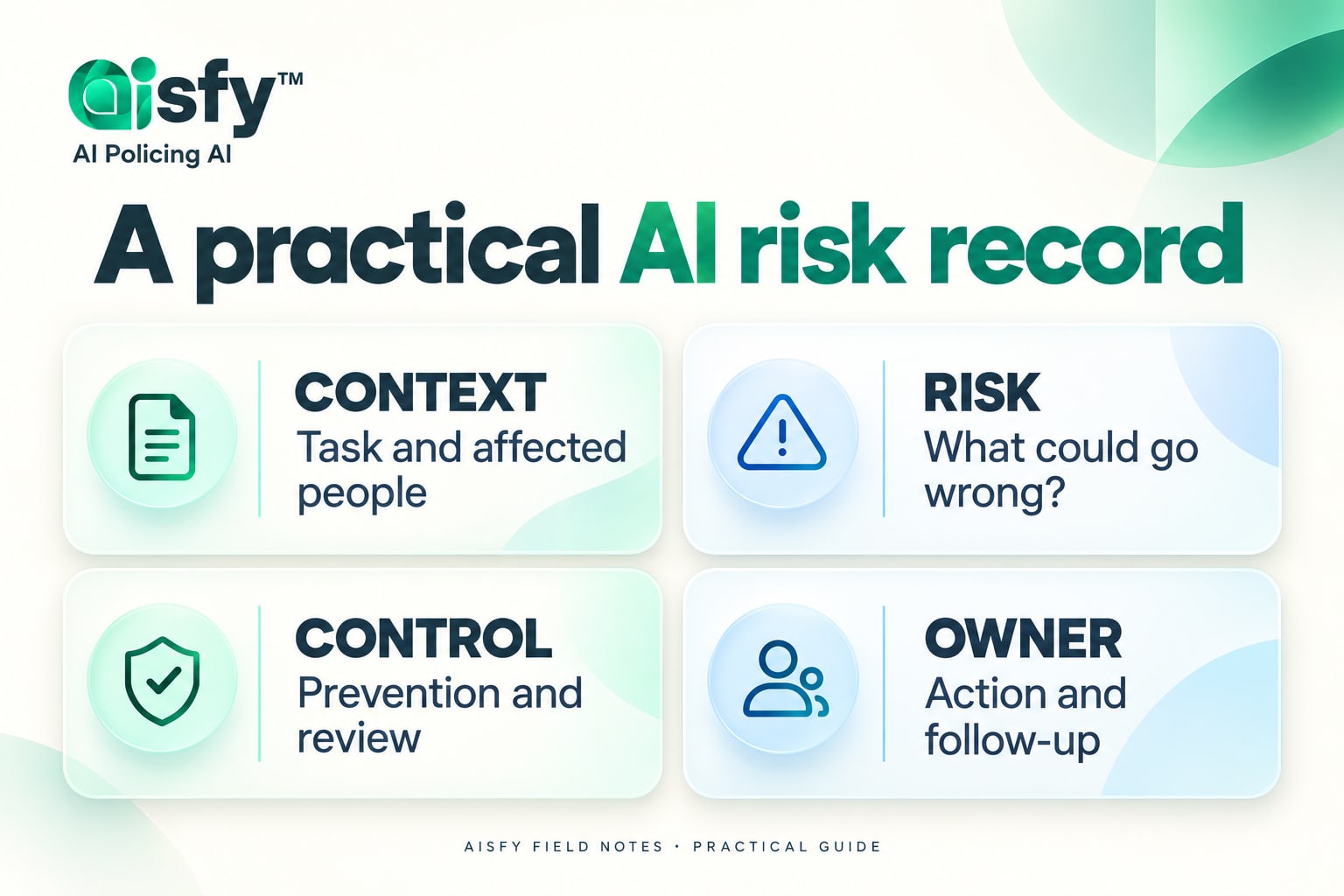
NIST’s voluntary AI risk guidance is one reference for responsible practice, but it does not replace the organization’s obligations or specialist advice. The companion risk-register exercise can help test how a policy decision would work on a specific use case.
- Capture the question, decision and authority.
- Mark proposals and unresolved items explicitly.
- Use a permitted case and a stop case to check understanding.
- Confirm the route for approval and later review.
What questions do readers frequently ask?
Is an AI compliance workshop legal advice?
This learning scope supports awareness, scenario discussion and responsibility. It does not determine legal compliance or replace advice from qualified specialists.
What if the decision-maker cannot attend?
Record the recommendation and the question requiring approval. Do not treat workshop consensus as authorization from an absent owner.
Which sources support this guide and further reading?
The exercises and worksheets are AISFY editorial guidance. They are not vendor certification or a claim of measured customer outcomes.
How can you put this guide into practice?
Use these questions to prepare a team brief, then explore ai governance and compliance workshop to discuss the appropriate scope. Continue through the ai governance & compliance learning category for the related checklists and exercises.