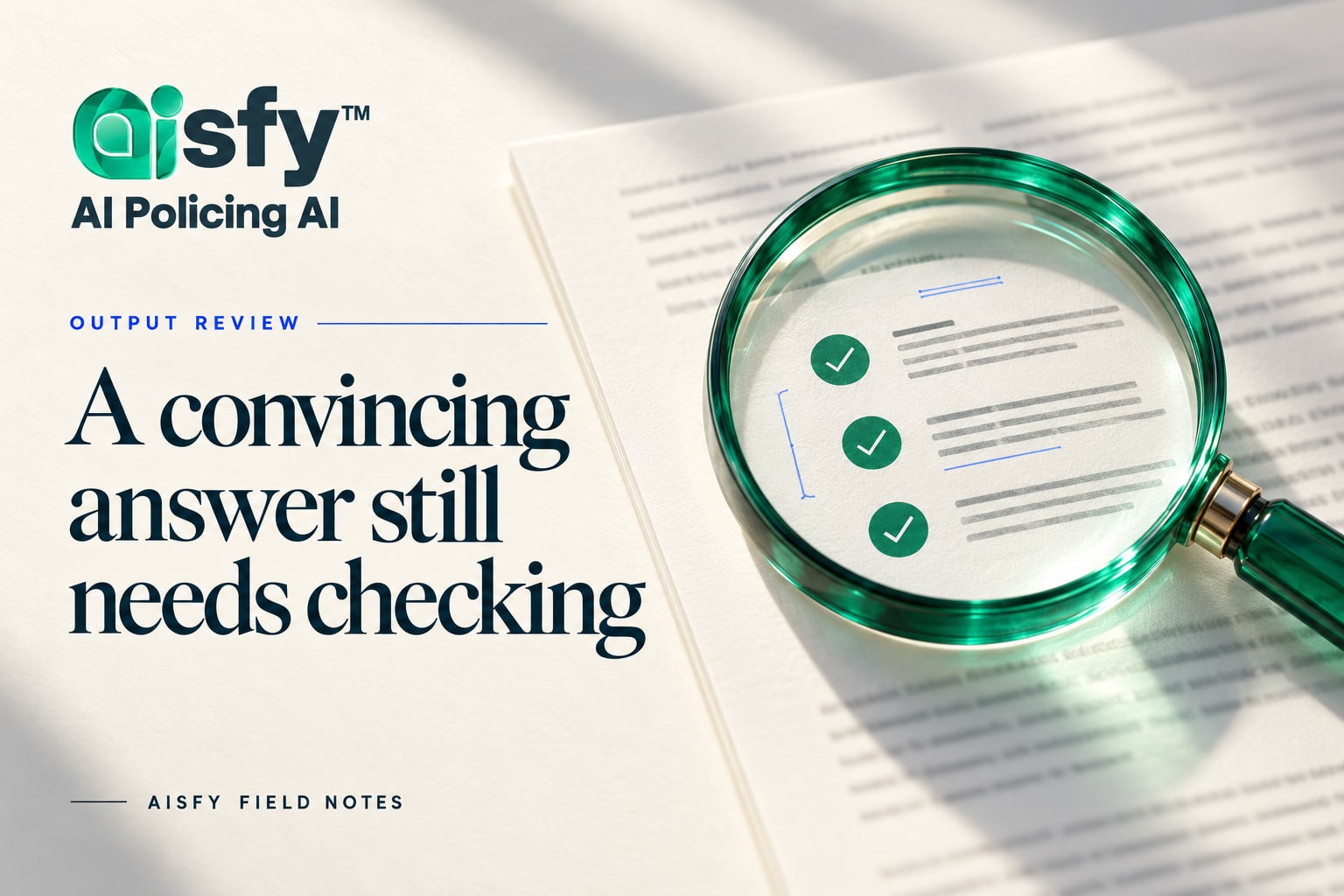
Treat a ChatGPT output as a draft to evaluate. Before using it, check whether the source supports it, whether important information is missing and whether the wording implies an action nobody has approved.
How should teams start with the consequence of an error?
A brainstorming note and a client-facing financial statement do not need the same review. Decide who could be affected if the output is wrong and whether the intended use is allowed. Do not use this general checklist to replace specialist review for high-consequence decisions.
For a routine internal summary, the main risk may be an incorrect date or missing action. For a message to a customer, an invented promise can change expectations. The reviewer needs to understand the task, not just recognize grammatical sentences.
How should teams use a claim-by-claim review?
Identify the factual statements in the draft and compare them with the approved source. Separate facts, assumptions and suggestions. If the source is incomplete, the output should expose the gap rather than fill it with confident prose.
| Review area | What to verify |
|---|---|
| Facts | Names, dates, quantities and source meaning |
| Calculations | Inputs, units, formula and independent recalculation |
| Coverage | Exceptions, caveats and unresolved issues |
| References | Source exists and supports the specific claim |
| Authority | No invented approval, deadline or commitment |
| Tone and audience | Appropriate language and level of detail |
| Information handling | Only permitted content reaches the intended audience |
How should teams test with a deliberately imperfect draft?
Create a fictional note that says “three applications await review” and a draft that says “three applications were approved.” Ask participants to identify the change in meaning and explain why fluent wording did not make it correct. Add a missing deadline and see whether the reviewer notices the omission.
A useful training check contains errors the reviewer can find from the supplied source. Do not secretly introduce ambiguous facts and then score participants for guessing your intended answer. The exercise should assess review skill, not familiarity with an unstated policy.
How should teams record a decision, not just a score?
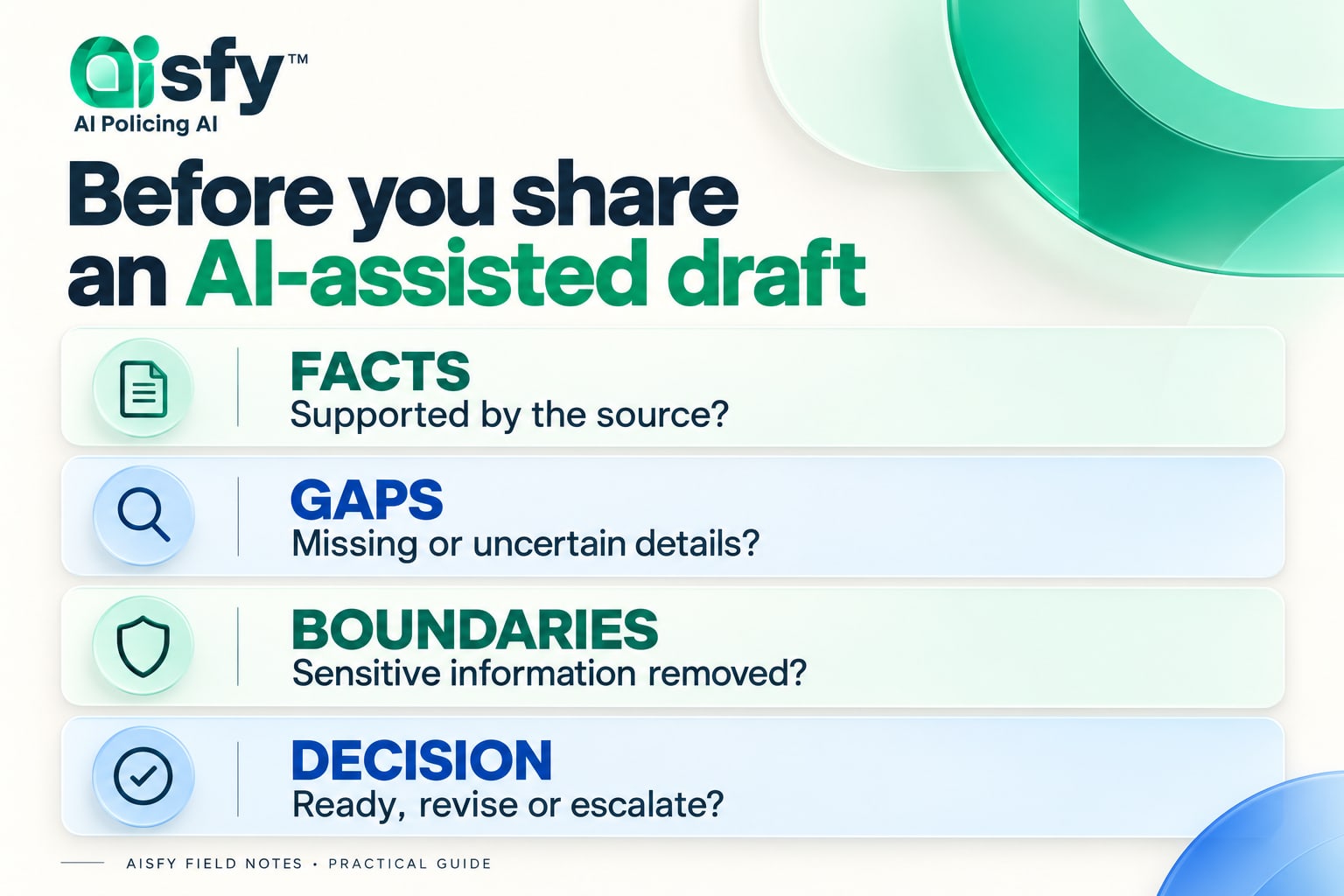
After review, choose one of three outcomes: accept within the approved scope, revise and review again, or reject and escalate. A score can summarize an assessment, but a critical error should not disappear inside an average.
For example, a draft may be clear, complete and well structured while containing one unauthorized commitment. The correct action can still be rejection. Define these critical failure conditions before reviewing so the standard does not move to fit an appealing result.
How should teams keep the checklist usable in real work?
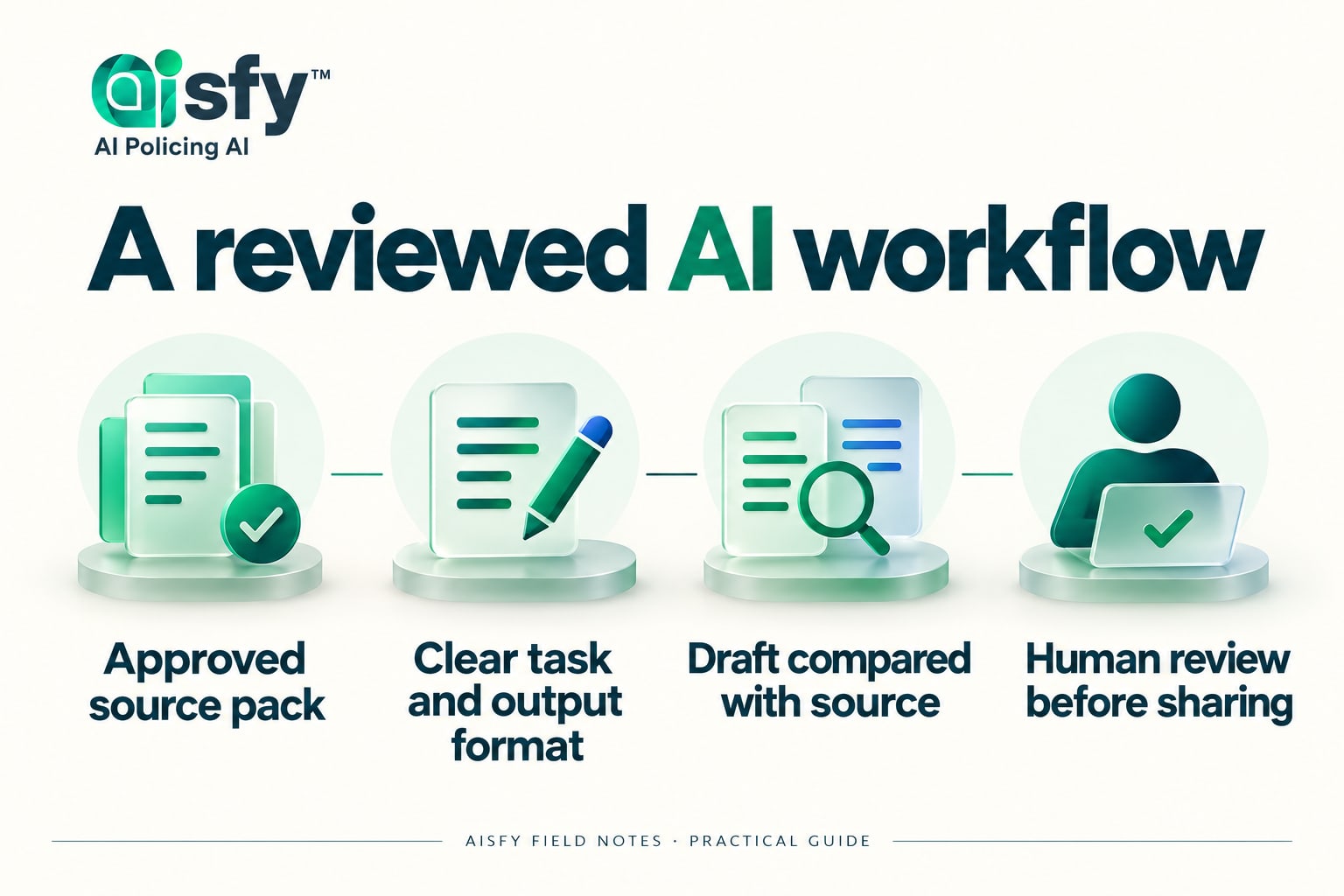
Begin with the checks relevant to the task and name the reviewer. If the checklist becomes too long to complete, split it into a short universal review and a specialist section for the specific workflow. Preserve the checks that catch material errors.
Revisit the checklist when the source material, intended use or tool configuration changes. Store only the review evidence your organization permits. The companion workflow exercise shows how to connect these checks to a brief, a draft and a revision, and the team workshop can help participants practise the sequence.
- Record what was checked and the evidence used.
- Name the person responsible for final use.
- Make unresolved questions visible.
- Use existing escalation and approval channels.
What questions do readers frequently ask?
Can ChatGPT verify its own answer?
It can help identify questions and inconsistencies, but self-review is not independent evidence. Check the original sources and involve the responsible human reviewer.
Should every output receive the same checklist?
Use a consistent core method, then adapt the detail to the task and consequences. Some uses require specialist review or should not proceed.
Which sources support this guide and further reading?
The exercises and worksheets are AISFY editorial guidance. They are not vendor certification or a claim of measured customer outcomes.
How can you put this guide into practice?
Use these questions to prepare a team brief, then explore chatgpt workshop for teams to discuss the appropriate scope. Continue through the chatgpt training for teams category for the related checklists and exercises.