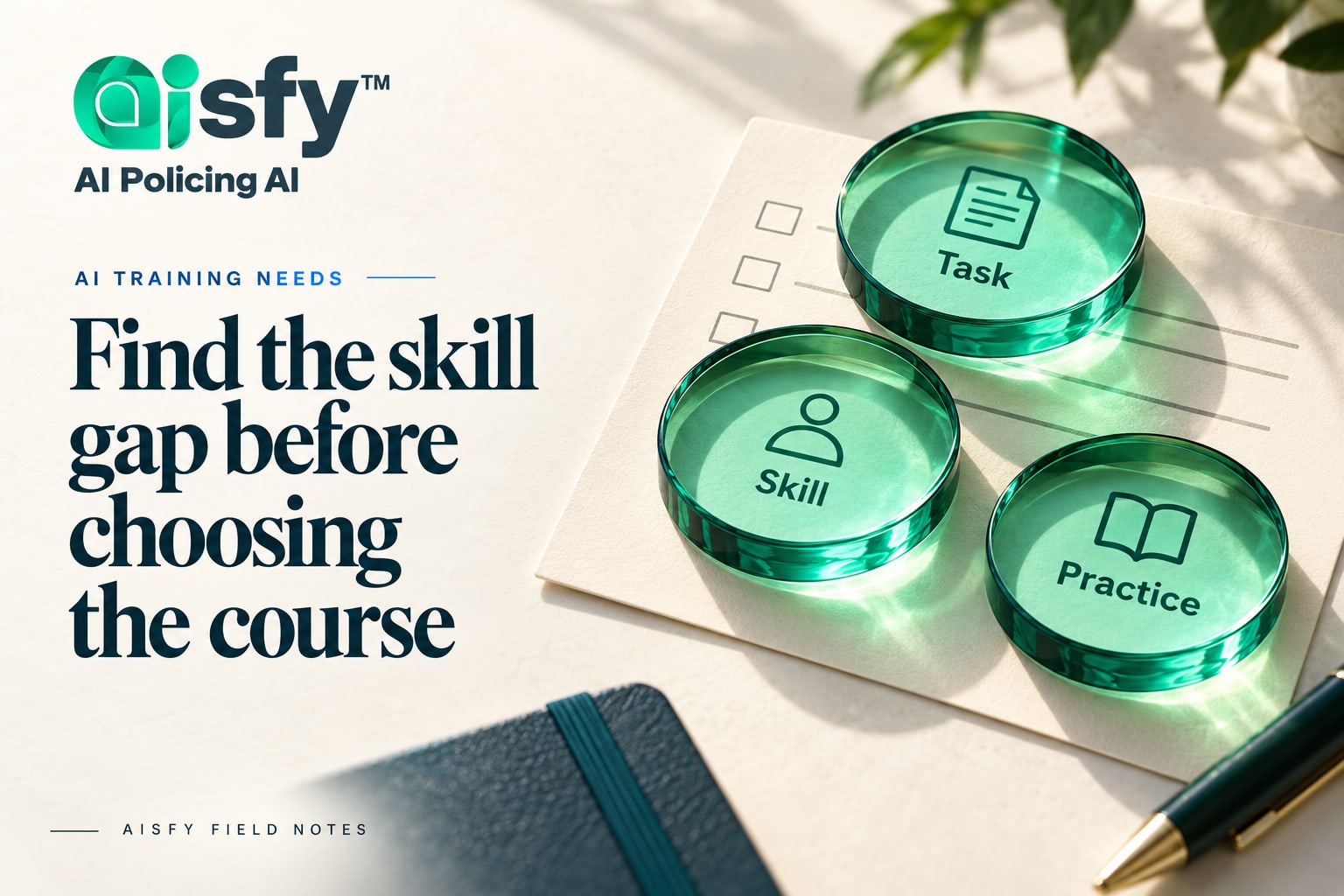
An AI training needs analysis should separate a skill gap from an access problem, an unclear policy and a poorly defined process. A workshop can address learning needs; it cannot resolve every barrier to adoption.
How should teams collect evidence from a small set of tasks?
Ask a manager and several employees to describe the same recurring activity. Capture what enters the task, what leaves it, how long review takes and which mistakes cause rework. Use a fictional or approved example rather than collecting sensitive employee work for convenience.
A useful interview asks “Where does the draft become difficult to trust?” instead of “Would you like AI training?” The first question can reveal missing instructions, ambiguous approval rules or inconsistent source documents. Those conditions matter even if a participant already knows how to use an AI tool.
How should teams classify the gap before choosing an intervention?
Use this worksheet to identify the next responsible owner. Several gaps can coexist in one team. Record uncertainty rather than forcing every finding into the training column.
| Observed barrier | Likely next action | Owner to involve |
|---|---|---|
| Cannot describe the intended output | Practise task definition and review | L&D and manager |
| Approved account is unavailable | Resolve access before exercises | IT or tool administrator |
| Nobody knows which data is allowed | Clarify information rules | Policy or data owner |
| Source documents disagree | Repair the underlying process | Process owner |
| Draft looks fluent but includes invented facts | Practise source verification | Reviewer and facilitator |
How should teams establish a modest starting point?
Choose a representative task and define a short rubric. For an internal update, the rubric might require all dates to match the source, every action to have an owner, and unresolved items to remain unresolved. Ask participants to explain their choices; a polished output can hide weak understanding.
Keep confidence self-ratings separate from observed performance. Someone who reports low confidence may produce careful work, while someone highly confident may miss a critical error. Do not use a small exercise as a judgment of overall employee performance.
How should teams build a cohort around shared work?
Group participants by the decisions and outputs they need to practise, not just job title. Two departments may share document-summary tasks but use different approval paths. Start with the common skill, then adapt the examples and review rules.
Record the expected spread of experience. Beginners may need guided practice; experienced participants may need harder examples with conflicting information. Give everyone a meaningful review task so the session does not become a race to produce the fastest answer.
How should teams turn the analysis into a workshop decision?
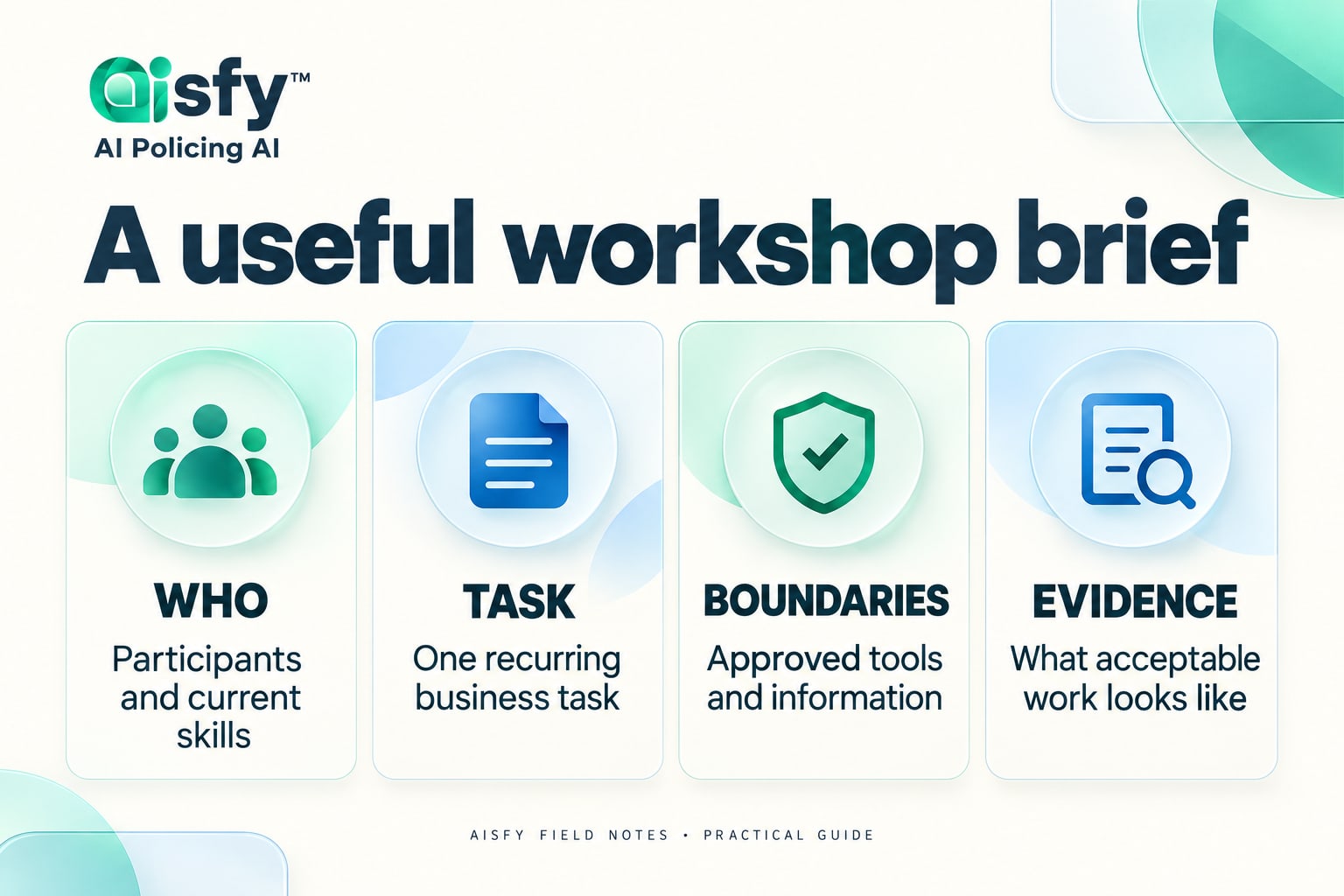
Write down the learning objective, prerequisite decisions and evidence you will collect afterwards. For a fictional operations team, this might be “draft a handover with no invented completion claims,” with access and sample-material approval as prerequisites.
If the analysis mainly reveals unavailable accounts or conflicting policy, resolve those barriers before commissioning a practical session. If it reveals a bounded skill gap, use the enterprise workshop catalogue to choose the relevant focus and include the worksheet in the scoping conversation.
- One task and an intended reader.
- A baseline example and acceptance rubric.
- Named access and information owners.
- An appropriate cohort and reviewer.
- A supervised practice opportunity after training.
What questions do readers frequently ask?
Is a self-assessment enough?
It is a useful signal, but combine it with a task example and a discussion with the reviewer. Confidence alone does not demonstrate capability.
How many employees should be assessed?
Choose a sample that covers the relevant roles and experience levels. The appropriate size depends on the decision; do not describe a small convenience sample as representative of the whole organization.
How can you put this guide into practice?
Use these questions to prepare a team brief, then explore enterprise ai workshops to discuss the appropriate scope. Continue through the enterprise ai training category for the related checklists and exercises.