Why should ChatGPT training include evidence review?
OpenAI reports that more than 98% of Morgan Stanley advisor teams adopted its internal AI assistant. The case describes expert evaluation and feedback. OpenAI — Morgan Stanley customer case.
Evidence limits: This is a vendor-published adoption figure for an internal system, not an independent productivity study or a result for a standard ChatGPT account.
The Morgan Stanley example makes evaluation part of the operating method. A useful training brief therefore specifies the material staff may use, the decisions they may support, and who approves the result. A demonstration that produces fluent prose does not test these responsibilities.
How can a team assess a ChatGPT training exercise?
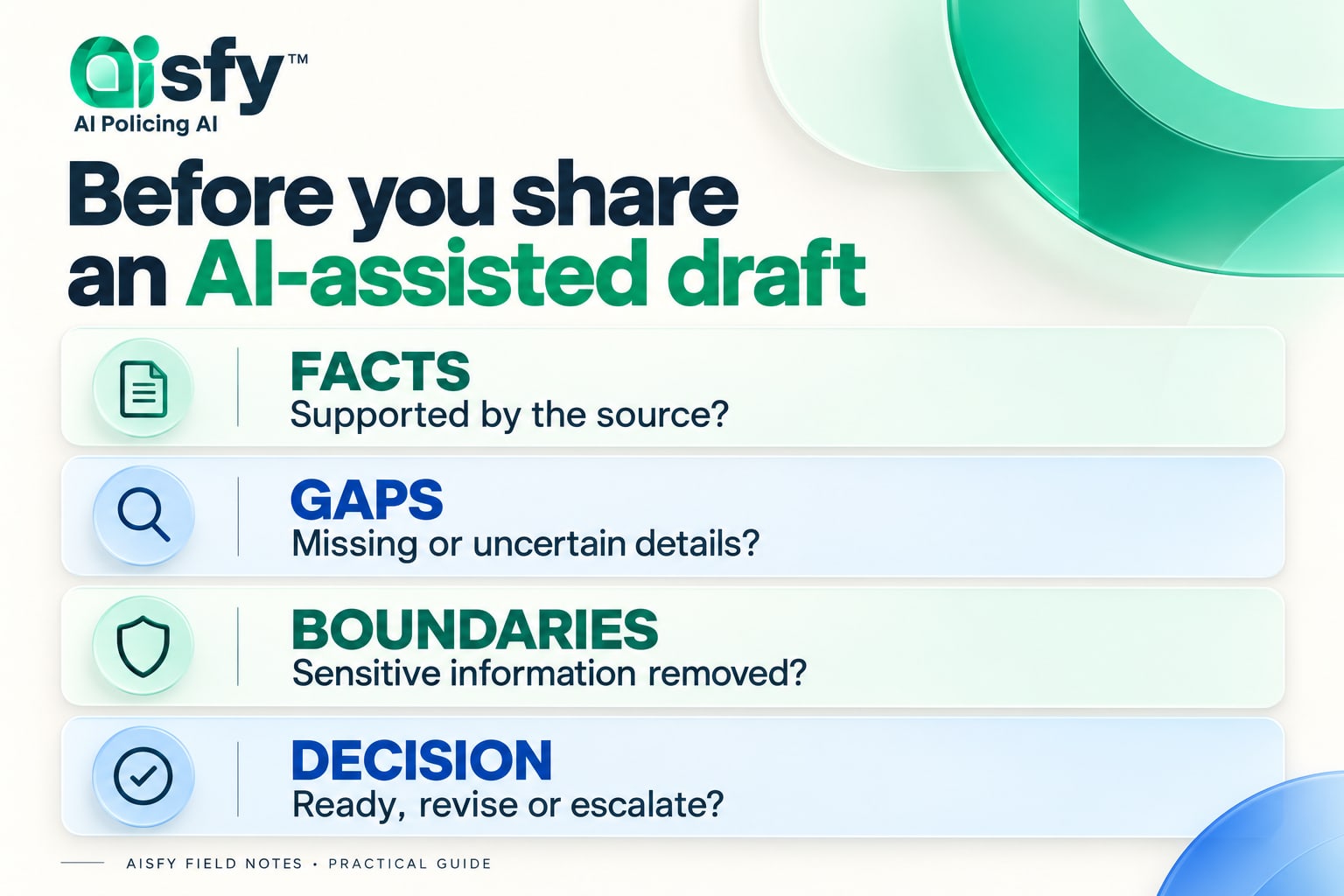
Use a fictional customer renewal: the notes contain a service date, an unresolved complaint and no approved discount. Ask for a draft response. The reviewer must confirm the date, preserve the unresolved status and reject any invented offer. Record factual corrections separately from tone edits; a polished response with an unauthorized discount fails.
Sources checked 20 October 2026. External examples are not AISFY customer results. Practice scenarios are editorial examples.
Why should ChatGPT training establish a shared working method?
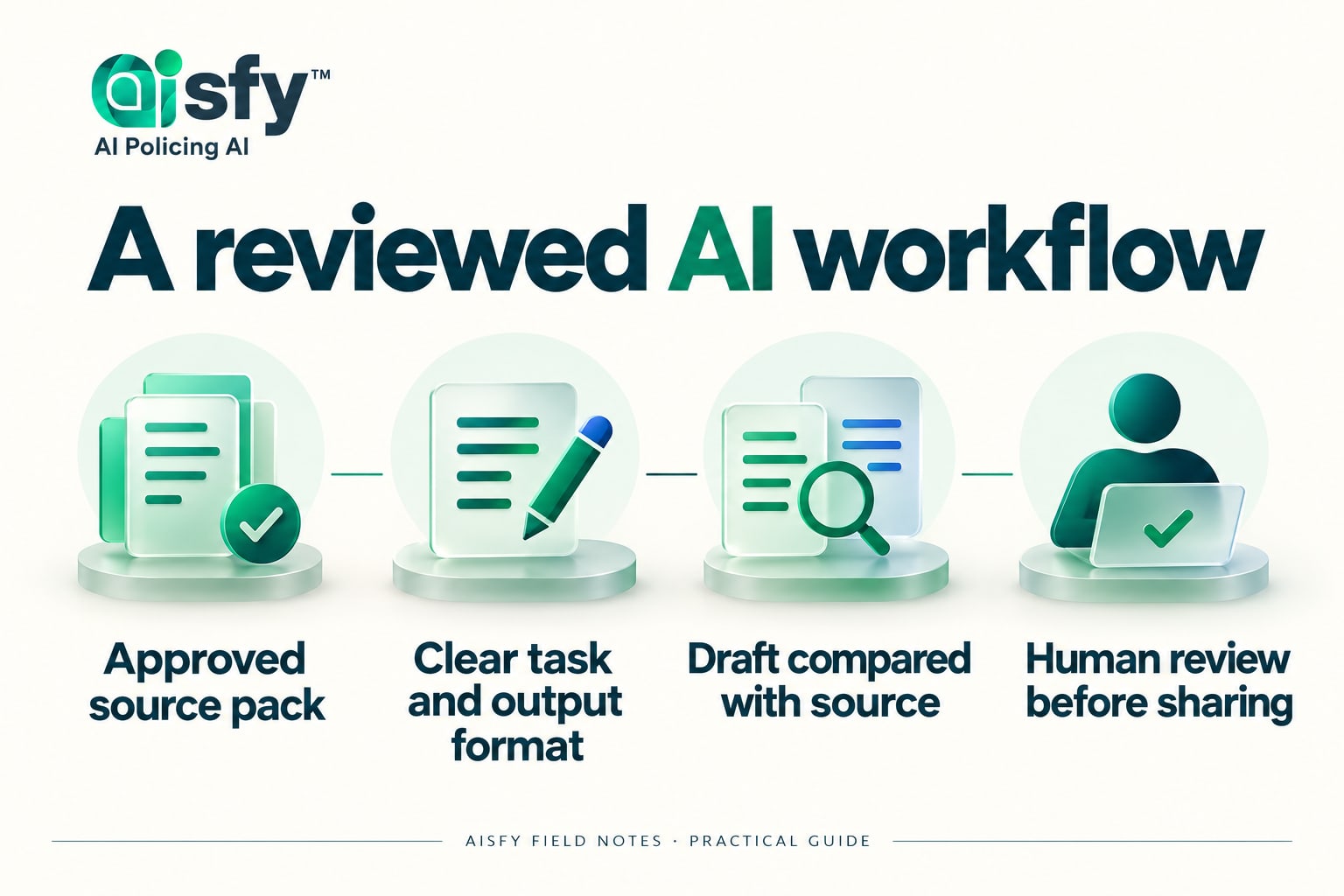
ChatGPT training should help a team complete a defined task, check its sources and decide whether the output is ready to use. Begin by examining current work samples and approved information boundaries. The objective is a repeatable method that employees can demonstrate, rather than a promise that training automatically creates adoption or savings.
Which team tasks can ChatGPT training examine?
- Writing assistance — drafting, rewriting, simplifying and adapting emails, reports, posts and internal content.
- Research support — turning rough notes and source material into usable summaries and briefs (with verification before anything is shared).
- Planning — plans, checklists, campaign outlines and meeting structures checked against the team’s requirements.
- Analysis support — comparing options, spotting patterns, building decision-support summaries a human then judges.
- Quality review — asking it to critique and improve work before it is shared, with a person responsible for the final decision.
- Spreadsheet help — formulas and data-task explanations for everyday office analysis.
The watch-item: verify facts before anything leaves the building. ChatGPT is confident by default, including when it is wrong, so review habits are part of the skill — not an optional extra.
How should ChatGPT training teach structured task design?
A few clever interactions are not a capability. Teams need a simple operating system for defining work, and the five-part structure works in every case: Role (tell it who it is, within policy), Task (define the outcome), Context (what it needs to know — never sensitive data), Format (specify the output so it is easy to review), and Guardrails (what to avoid: confidential information, unsupported claims, decisions that belong to humans). Adding examples and constraints raises quality further — most weak outputs trace back to vague requests.
How should ChatGPT team training connect practice and review?
The training structure we use runs in three moves. Align: connect the session to real productivity goals — participants name the recurring tasks that eat their week. Equip: hands-on practice across those actual tasks — writing, planning, research, analysis, review — with data sensitivity embedded in every exercise, not appended at the end. Measure: capture confidence shift and the workflow each participant will improve, then follow up at 30, 60 and 90 days to see whether adoption held.
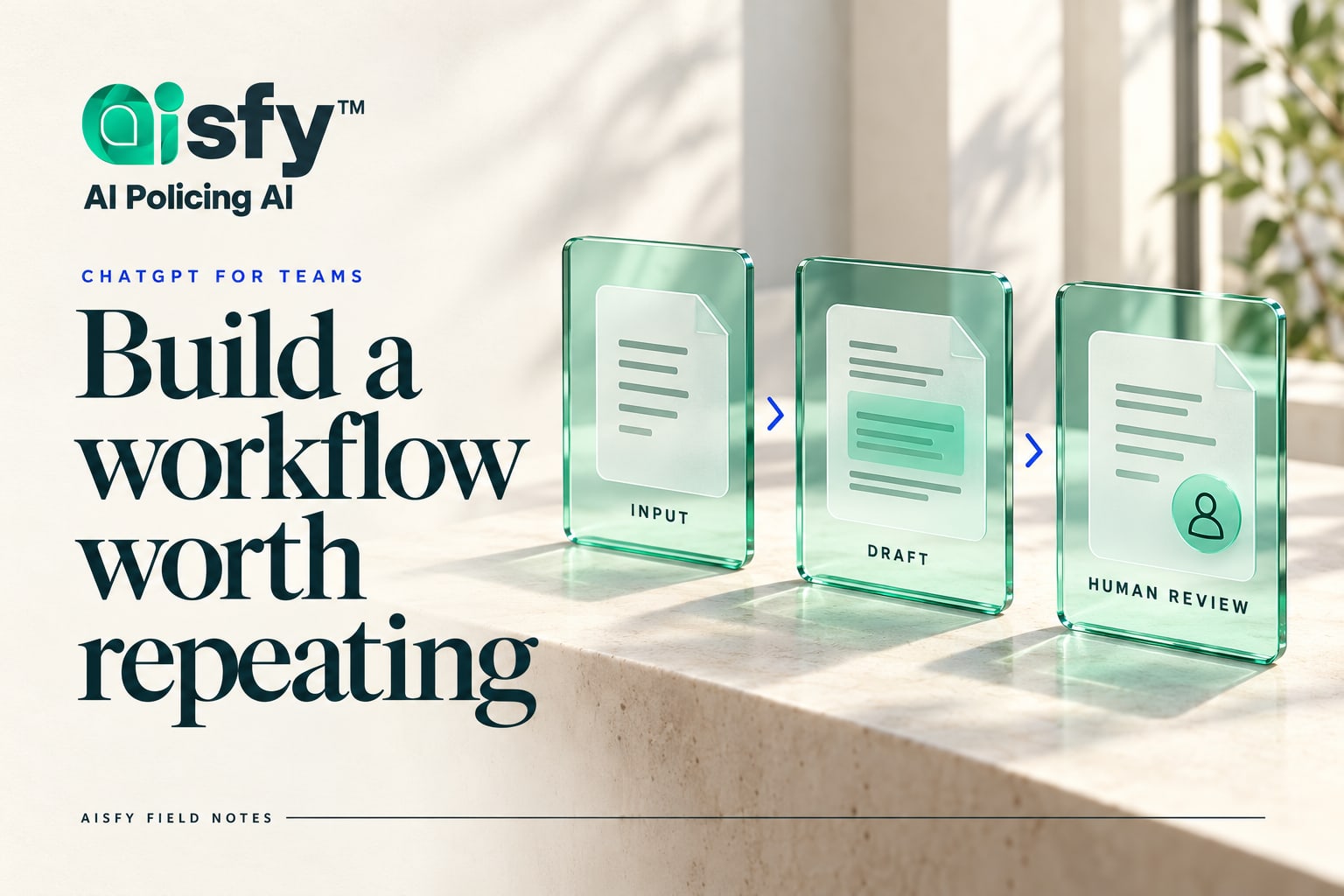
The single highest-leverage closing exercise: each participant identifies one recurring task, builds a reusable skill or workflow for it, and defines the review rule they will apply before sharing its output. Personal skills and use-case libraries — by role and by recurring deliverable — are what make the difference between a workshop and a capability.
What evidence should leaders request after ChatGPT training?
Not attendance records. Ask for: confidence scores by workflow, the list of workflow improvements identified per team, evidence that review habits are being applied, and whether the skills and use-case libraries are still in use a month later. If those are missing, the training was a demo.
What questions do teams ask about ChatGPT training?
Do participants need ChatGPT access during training?
Ideally yes — practicing live on their own tasks is what builds skill. Guided demonstrations work as a fallback while access is being arranged, but hands-on beats watching.
How does ChatGPT training handle sensitive information?
As a skill, embedded in every exercise: what never goes into a AI tool, how to structure workflows so sensitive context is not needed, and when human judgment overrides the output. One incident costs more trust than a hundred good drafts earn.
How should teams choose between ChatGPT and another tool?
ChatGPT may fit a mixed team when its available features and approved environment support the intended tasks. Teams inside Microsoft 365 or Google Workspace often get faster adoption from Copilot or Gemini because the AI sits inside their existing apps; document-heavy teams should also look at Claude. Many organizations train one primary tool plus an orientation on when another is the better fit.
How can ChatGPT training produce a reviewed team exercise?
Use an approved account and a fictional source pack to create a management brief. Require the draft to separate facts, assumptions and questions. Participants should verify the output against the source and remove unsupported claims before it is shared.
Check the features and administrator settings available to the actual participants. Do not design an exercise around a capability available only in the facilitator’s plan. If a task involves files or connected information, confirm the organization’s permission and data requirements first.
How should ChatGPT training assess a second task?
Ask participants to repeat the method on a different source pack and explain what changed. A good result on the demonstrated example does not prove the method transfers. Keep the task brief, corrections and review decision as the useful learning record.
When comparing effort, count source preparation and review as well as drafting. Choose the next workplace task from what the team can evaluate reliably, not from the most impressive demonstration.
For workshop options, explore enterprise AI workshops. Use the preparation checklist and evaluation guide to connect the session to a practical next step.
What do the visual guides illustrate?