
The complete WAM report and the full Dubai Taxi Company press release carried by Zawya were read on 17 November 2026. WAM records 16 November 2026 at 15:51:16 Asia/Dubai, inside the exact 16 November 08:00 to 17 November 08:00 coverage window. The article preserves the announced four-week November start and does not infer an exact delivery date, enrolment, attendance, completion, capability gain, workplace transfer, productivity improvement or operational result. Sources: Emirates News Agency — Dubai Taxi Company launches AI training programme for more than 400 employees; Dubai Taxi Company press release carried by Zawya — AI Drive Month programme detail.
17 November 2026, UAE workforce-learning development: Dubai Taxi Company and Dubai AI Campus have announced AI Drive Month, a four-week programme intended to reach more than 400 employees through four formats matched to different roles. For COOs, CHROs, CAIOs, HR directors and L&D leaders, the useful decision is what each format should enable people to demonstrate—not whether one attendance measure can represent the whole workforce.
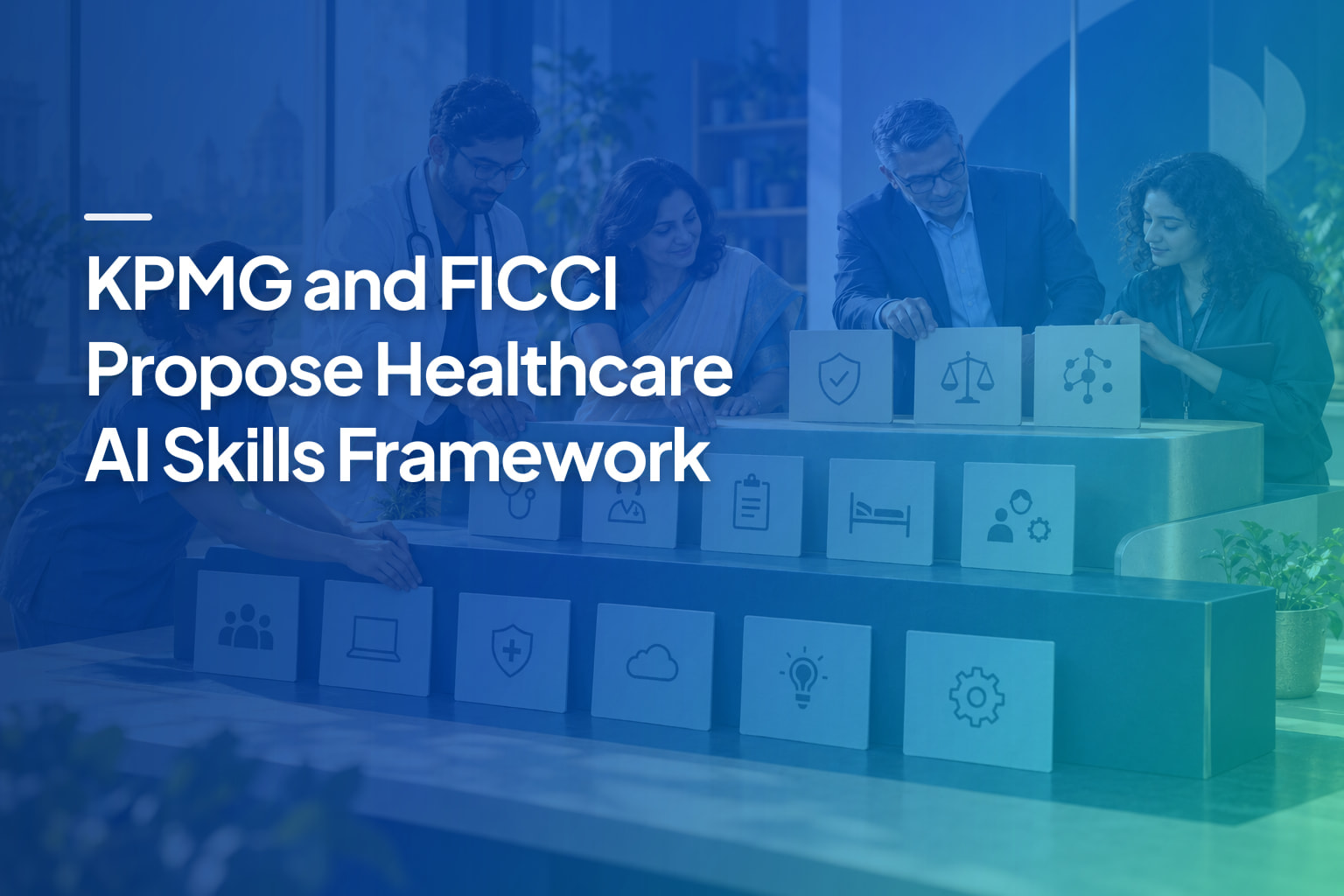
The featured image is an AISFY editorial photograph of a fictional scene. It does not depict the reported MoU signing, programme, participants, venue or learning activity.
What did Dubai Taxi Company and Dubai AI Campus announce?
The Emirates News Agency report published on 16 November at 15:51 Dubai time says Dubai Taxi Company signed a memorandum of understanding with Dubai AI Campus at DIFC Innovation Hub to launch training for more than 400 employees. Dubai AI Academy will deliver the programme. A Dubai Taxi Company press release carried by Zawya describes AI Drive Month as a four-week programme beginning in November 2026.
The announcement connects the learning plan with DTC's use of generative, predictive and agentic AI across areas including fleet operations and booking channels. That is company-reported context for the programme, not evidence that the new learning has already changed employee capability, decisions, customer experience or operational performance.
How do the four learning formats differ?
Lead the Drive is a two-day experience for senior management covering AI strategy, agentic AI, enterprise cases, practical tool use, ethics and data privacy. It ends with leaders designing and pitching a DTC use case. Power the Engine provides managers, specialists and executives with 10 hours of live online sessions on foundations, productivity, responsible use and applied workplace scenarios.
Fuel the Movement is a self-paced certified course covering generative AI and tasks such as writing, summarisation and analysis. Inclusion Lane is an English-and-Arabic AI majlis accessible to every employee, pairing participants with leadership AI champions. The sources present these elements as an announced role-tiered design; they do not report how the more than 400 intended participants will be allocated across them.
What does the announcement not yet establish?
The four-week programme has been announced and is described as starting in November, but the sources do not publish an exact start date, learner baselines, assessment rubrics, completion records or workplace-transfer measures. They also do not report independent evidence for the stated goals of stronger AI literacy, faster or higher-quality decisions, improved productivity, secure adoption or operational innovation.
A use-case pitch can show that leaders have framed an idea; certification can show that a course requirement was completed; a majlis can widen access and discussion. None of those records alone establishes that someone can perform a role task safely on a new scenario or apply the capability later in work.
What evidence should a buyer pair with each learning tier?
AISFY editorial decision aid: This comparison is AISFY's interpretation of the announced formats. It is not a DTC assessment plan, reported result or recommendation of a provider.
| Announced element | Decision it can support | Evidence before expansion |
|---|---|---|
| Two-day senior-leader experience | Which bounded use case should be explored, governed or stopped? | A reviewed brief naming the purpose, affected people, information boundaries, accountable owner, human review and next gate. |
| Ten hours of live role-based learning | Can managers and specialists apply an approved method to a realistic work scenario? | Observed individual performance on a new scenario, scored against a stated rubric for accuracy, correction, review and escalation. |
| Self-paced certified course | Has an employee completed a common foundation and understood safe-use boundaries? | An individual knowledge check plus a short role-relevant task; completion alone should not be treated as workplace capability. |
| English-and-Arabic all-staff majlis | Can employees access shared guidance, ask questions and identify approved support routes? | Coverage by intended workforce group, recurring questions, understood information boundaries and correct escalation choices on a short scenario. |
| Leadership champion network | Who will support practice and surface recurring barriers after the formal programme? | A defined remit, response standard, recorded questions and an accountable revise, stop or expand decision. |
AISFY reflection: evaluate each format against its own job
AISFY reflection: The useful feature of AI Drive Month is the separation of executive decisions, live role practice, self-paced foundations and workforce-wide access. Buyers can preserve that distinction by naming one observable output and one later work checkpoint for each tier. The next question is not simply how many people attended, but which role capability each person needed and what evidence will justify changing or extending the programme.
Use the AI training needs analysis to segment roles and baseline capability, then use the workshop evaluation guide to separate access, demonstrated capability and workplace transfer.
How much time should your team plan for AI training?
Estimate the time your team needs for sessions and follow-through. Change the example to fit your people; this is not a workshop package or quote.
- Per person
- 6hours
- Across the team
- 72person-hours
- Cohorts
- 1groups
- Facilitated sessions
- 4delivery hours
Compare programs against your challenge, audience and available time. Confirm the actual schedule and fees with the organizer.
Find relevant programs in AISFYYou may need to sign in. Results stay on this page and are not saved or transferred to your AISFY account. Copy your plan before continuing.
Assumptions & calculation
Cohorts = participants ÷ cohort size, rounded up. Per-person time = session hours + weekly practice × weeks. Team time multiplies that by participants. Delivery hours count repeated sessions across cohorts; they exclude facilitator preparation.
Defaults are illustrative inputs, not benchmarks or recommended commitments. Changing or leaving the page resets the plan.